
One buyer placed a deposit with a local home baker after seeing a photo on Instagram. The listing looked polished, the price seemed right, and the baker promised everything would be ready by Saturday.
When the cake arrived with the wrong design, crumbling edges, and no allergen label in sight, the birthday celebration went on without a centerpiece. Another buyer in the same city spent ten minutes asking five specific questions before paying a cent.
The cake arrived on time, exactly as confirmed in writing, and every guest with a nut allergy ate safely. The difference had nothing to do with price. It came down to five checks.
According to the CDC Food Safety Facts and Statistics page (reviewed April 2026), 48 million people in the United States get sick from a foodborne illness every year, and 128,000 are hospitalized.
Before you pay a deposit when buying a cake online, five checks separate a trusted, licensed custom cake baker from an unverified risk. This guide covers each one in plain language, in the order that matters most.
1. What This Check Involves
An Alabama cottage food license is not a formality. Before a baker receives one, the county health department reviews the baker’s product types, food handler certification, and product labels.
A licensed baker has cleared that review. A baker without one has not, and that gap has direct consequences for you as the buyer.
2. What to Ask
Ask the baker to verify their Alabama Cottage Food Law license is current and that the county health department has reviewed their product labels and food safety certifications before buying cake online.
A licensed baker can show you both. If a baker cannot produce either document, you have no health department complaint path and no recourse if something goes wrong on your event day.
A venue that requires proof of food licensing at delivery can also turn away a cake made by an unlicensed seller, leaving you without a centerpiece at the worst possible moment.
Alabama’s cottage food rules require full ingredient and allergen disclosure on every product label. Federal FDA law adds a second layer, making eight major allergen disclosures a legal requirement, not an optional courtesy.
This two-layer protection is the check that most buyers skip entirely, and it is the one with the highest stakes for guests at your event when buying cake online.
1. What This Check Involves
The FDA Food Allergens and Gluten-Free Guidance (updated January 2025) names eight major allergens: milk, eggs, wheat, peanuts, tree nuts, soy, fish, and shellfish. Every baker selling to consumers must clearly disclose all eight on every product.
Alabama’s cottage food label rules also require a full ingredient listing in descending order of predominance, the baker’s name and address, and a statement that the product was not inspected by the health department, all in at least 10-point font.
2. What to Ask
Before you establish the order details, ask these three questions directly:
A trustworthy baker answers all three immediately. The honest answer to the gluten-free question matters: a cottage kitchen is a home environment, which means cross-contact risk is real. A baker who discloses this clearly protects you. One who does not leave your guests exposed.
1. What This Check Involves
A clear order process documents every detail in writing before production begins. This covers the item, flavor, size, design description or photo reference, allergen notes, and pickup or delivery time. That written record is your only reference point if the finished cake does not match what you agreed to when you bought the cake online.
Verbal agreements disappear. A written record does not. This step matters most for photo cakes, logo cakes, themed designs, and gender reveal cakes, where a detail as small as the wrong color or wrong character design can make the product unusable for your event.
2. What to Ask
Three questions protect your order:
A baker who documents every design detail in writing before production starts gives you a clear reference point. A baker who works from a verbal description or a social media message gives you nothing to stand behind if the result misses the mark.
1. What This Check Involves
Baked-to-order means the cake is made within a defined window before your event. This matters most for buttercream, ganache, and dairy fillings, where time and temperature directly affect both texture and food safety when buying a cake online.
A cake stored for multiple days before delivery can arrive with weeping buttercream, a dried sponge, or components that pose a food safety risk if cold chain handling was inadequate.
The HHS OIG Report on FDA Food Safety Inspections of Domestic Food Facilities (issued May 2025) found that the FDA has not been inspecting domestic food facilities at the frequency required by law, leaving buyers with less federal oversight protection than most assume.
That gap makes your own freshness question the practical safety check, not a formality.
2. What to Ask
Ask the baker three things before placing any custom order:
A baker who can answer all three clearly operates with the freshness controls that a properly licensed cottage kitchen requires.
1. What This Check Involves
Owner credentials include three things that matter for your order: a current food safety certification, confirmed hands-on baking experience, and direct personal reachability by phone and email for the full duration of the order. When you deal directly with the owner, you have a named, reachable person accountable for every stage of your order from inquiry to delivery.
2. What to Ask
Ask the owner directly:
A healthcare or clinical background, particularly in nursing, signals something specific about how a baker approaches kitchen hygiene, allergen protocols, and attention to process detail. These are not soft qualities. They translate directly into the food safety practices that protect your guests and must be checked when you buy cake online.
3. What It Looks Like When a Baker Passes This Check
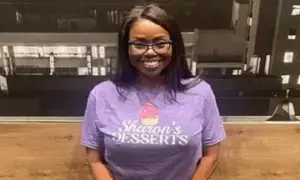
Sharon Dickerson, owner and head baker at Sharon’s Desserts, is a former registered nurse with close to three decades of nursing experience and over 10 years of baking experience.
Every custom order is handled personally by Sharon. Customers can reach Sharon directly by phone at +1 205-527-3644 and by email at mrsdickerson08@gmail.com for every order from inquiry through to delivery.
1. What does a cottage food license mean when I order a custom cake in Alabama?
An Alabama cottage food license validates that a home baker’s kitchen, products, food handler certification, and product labels have been reviewed by the county health department before the baker can legally sell to the public.
Under the Alabama Cottage Food Law FAQ published by the Alabama Department of Public Health (updated April 2026), licensed bakers may only sell non-potentially hazardous baked goods, including cakes, cookies, and pastries, directly to consumers within Alabama.
When you buy from a cottage-licensed baker, you have a complaint path and a verified legal framework protecting your purchase. When you buy from an unlicensed seller, you have neither.
2. Does a home baker in Alabama have to label allergens on every cake they sell?
Yes, on two levels. Alabama’s cottage food rules require a full ingredient list and major allergen disclosure on every product label. Ask to see the label format before you place your order, especially if any guest at your event has a known allergy.
3. How far in advance should I order a custom birthday or wedding cake online?
Lead time depends on design complexity and the occasion. Two to four weeks ahead works for most custom birthday and themed cake orders. Wedding cakes benefit from six to eight weeks’ notice to allow for tasting appointments, design records, and scheduling. Contact the baker directly to establish lead time for your specific design and date before booking any other event elements.
4. What should a written order confirmation include before I pay a deposit?
A complete written record should cover the item name, flavor, size, and tier count. It should also include a design description or photo reference clearly approved by the buyer, all allergen notes for the specific order, the pickup or delivery date and time, and the full price, including any size or customization variants.
If any of those details are missing, ask for them in writing before the deposit is collected. A baker who cannot document all of these points before production has no agreed reference to work from.
5. Can an unlicensed home baker legally sell custom cakes in Alabama?
No. According to the Alabama Cottage Food Law FAQ (April 2026), cottage food operators must complete an ANSI-accredited food safety course, obtain county health department label approval, and follow state product and sales regulations before selling baked goods to the public.
Buying from an unlicensed seller puts you outside any state food safety protection framework, with no complaint path and no documentation if something goes wrong.
You now have the five checks that separate a handcrafted, licensed custom cake from an unverified risk. Ask about the cottage license before you buy cake online. Establish the allergen labeling. Get the design documented in writing. Validate that the cake will be freshly baked. Talk directly to the owner.
Sharon’s Desserts checks every one of those boxes. Sharon Dickerson, a former registered nurse with over 10 years of baking experience, holds a confirmed Alabama cottage food license and operates from a health department-certified kitchen.
With 98 unique products across 65 bakery specialties, every order is handcrafted fresh in small batches and documented in detail before a single layer is baked.
Start your custom cake order today.
Visit Sharon’s Desserts, browse the full menu, and place your inquiry directly with Sharon.
Handcrafted desserts made with love and sweetness.